

You’ve probably heard the word “peptides” lately — from a friend, a podcast, or someone at the gym. Maybe you’ve heard about Ozempic. But what are peptides, really? And are they right for you?
This is a simple introduction. No science degree required. In about seven minutes, you’ll understand what peptides are, which ones are proven, which ones are still experimental, and why — after nearly 30 years as a personal trainer in Los Angeles — I believe every conversation about peptide therapy needs to include one more word: wellness
Disclosure: Fedele De Santis Private Fitness has a business collaboration with Noho Labs. Details are below.
The Basics
What Are Peptides? A Simple Explanation
Think of your body as a language. Amino acids are the letters. Peptides are short words. Proteins are full sentences.
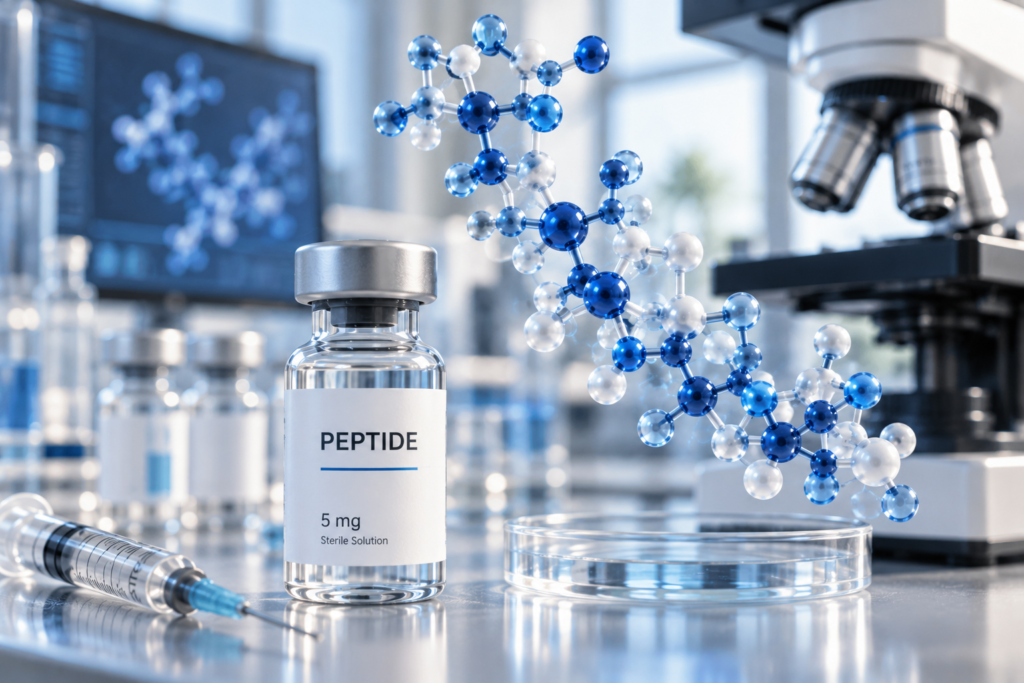
Peptides are short chains of amino acids, and your body makes thousands of them every day. They work like messengers, carrying signals that tell your body when to feel hungry, when to release a hormone, when to store energy, or when to begin repairing tissue.
Scientists have learned to create peptide medications that copy or influence these natural messages. And this isn’t new: insulin, one of the most important medications of the last century, is a peptide.
What’s new is the attention. Medications like semaglutide (Ozempic, Wegovy) and tirzepatide (Mounjaro, Zepbound) have made peptide therapy one of the most talked-about topics in health today.
Know the Difference
FDA-Approved Peptides vs. Experimental Peptides
This is the most important thing to understand as a beginner: not all peptides are the same.
Some have gone through years of clinical trials and are FDA-approved for specific medical conditions. Others are popular online but have not been proven safe or effective in people.
| FDA-Approved Peptide | Approved For |
|---|---|
| Semaglutide Ozempic, Wegovy | Type 2 diabetes, weight management and other labeled uses |
| Tirzepatide Mounjaro, Zepbound | Type 2 diabetes, weight management and other labeled uses |
| Liraglutide Victoza, Saxenda | Type 2 diabetes or weight management, depending on the product |
| Insulin | Diabetes |
| Teriparatide Forteo | Osteoporosis in eligible patients |
| Tesamorelin Egrifta | Excess abdominal fat in HIV-associated lipodystrophy |
Experimental peptides you’ll see online — BPC-157, TB-500, CJC-1295, ipamorelin and injectable GHK-Cu and many more— are often promoted for recovery, muscle and anti-aging. They are NOT FDA-approved for those uses, and much of the evidence behind them comes from animal studies rather than large human trials.
A SIMPLE RULE
If someone promises dramatic results from a peptide, ask one question: “Is this FDA-approved for what you’re recommending?”
In the News
What Changed With Peptides in 2026? BPC-157 and the FDA, Explained
If you’ve seen headlines about the FDA and peptides this year, here’s the short version.
In April 2026, the FDA removed BPC-157 and eleven other peptides from a list of substances it had flagged as too risky for pharmacies to compound. In July, an FDA advisory committee voted 8–6 to recommend allowing BPC-157 in compounding, and also recommended KPV, TB-500, MOTS-c, Epitalon and Semax. Many more will be added to the list hopefully sooner then later.
What does that mean for you? Less than the headlines suggest. The vote was a recommendation, not a final decision — and it is not FDA approval. The FDA’s own scientists had recommended against adding these peptides. Before any of them can be legally compounded, the FDA must complete a formal rulemaking process, which, as of this writing, has not happened.
The takeaway: the science and the rules are still evolving. That’s exactly why your information should come from licensed medical professionals, not social media.
The Benefits
What Can Peptides Actually Do?
Here’s an honest look at where peptide therapy stands today:
Weight management
FDA-approved GLP-1 medications can help eligible patients achieve meaningful weight loss.
Blood sugar & metabolic health
Several peptide medications are standard treatments for type 2 diabetes.
Bone health
Teriparatide helps build bone in people with osteoporosis.
Recovery & injuries
Researchers are studying tissue repair, but human evidence is limited.
Muscle growth
No experimental peptide has reliably shown it builds muscle in healthy adults better than training and nutrition.
Longevity & anti-aging
No peptide has been proven to extend human lifespan.
Who Is It For?
Peptide Therapy in Your 30s, 40s, 50s and Beyond
There’s no “right age” to start peptide therapy. The right decision depends on your health, your history and your goals — and it should always be made with a licensed clinician.
In your 30s and 40s, the focus is usually prevention. If you’re dealing with persistent fatigue, stubborn weight gain or changes in body composition, a medical evaluation can help find the cause before assuming you need a medication.
In your 50s, protecting muscle, bone and metabolic health becomes a priority. Some people in this stage may qualify for approved treatments for obesity, type 2 diabetes or osteoporosis.
In your 60s and beyond, the goal shifts toward mobility, balance and independence. Any medication should work alongside strength training, good nutrition and regular movement — never replace them.
At every age, the foundation is the same: train consistently, eat enough protein, sleep well and ask good questions.

The Trainer's Perspective
GLP-1 Muscle Loss: Why Strength Training Matters
This is the part of the conversation I care about most.
GLP-1 medications reduce appetite and help people lose weight. But weight isn’t only fat. Several clinical trials report that 35–45% of the weight lost on these medications can be lean mass — which includes muscle.
Muscle isn’t just about appearance. It supports your metabolism, your balance, your bones and your independence as you age. Losing it quickly can leave you weaker, slow your metabolism and make it easier to regain weight later.
The good news: strength training sends your body a clear signal to hold on to muscle. Doctors and researchers recommend that people on GLP-1 medications combine treatment with resistance training — generally two to three times per week — and adequate protein.
“Medication can help you lose weight. Training decides what kind of weight you lose.”
For clients in their 40s, 50s and beyond — especially women navigating perimenopause and menopause, when muscle loss already speeds up — this matters even more. A private personal trainer can adjust intensity on days when side effects like nausea or fatigue show up, and keep you progressing safely.
The Trainer's Perspective
Are Peptides Safe? 5 Questions to Ask Your Doctor
Even FDA-approved medications have side effects. GLP-1 medications, for example, commonly cause nausea and other digestive symptoms. Experimental peptides add more uncertainty, because long-term human safety data is limited.
Before starting any peptide therapy, ask:
- Is this medication FDA-approved for my condition?
- If it’s compounded, which licensed pharmacy makes it, and how is it tested?
- What are the expected benefits, side effects and alternatives?
- Do I need lab work first, and how will you monitor me?
- Who is the licensed clinician responsible for my care?
One more tip: a certificate showing “99% purity” doesn’t mean a product is sterile, effective or safe to inject. The FDA’s BeSafeRx guide explains how to spot a legitimate online pharmacy.

The Collaboration
Noho Labs × Fedele De Santis Private Fitness
Since 1997, I’ve provided private personal training in West Hollywood and Beverly Hills for clients who value discretion, personal attention and long-term results. Today, I’m proud that Fedele De Santis Private Fitness is the first private fitness studio in West Hollywood and Beverly Hills to partner with Noho Labs.
Noho Labs is a physician-led telehealth platform. Through this collaboration, our clients can:
- Complete a medical intake and consult with a U.S.-licensed physician, nurse practitioner or physician assistant
- Have lab work ordered when it’s needed
- Receive a prescription only if it’s clinically appropriate, filled by licensed pharmacies, including 503A compounding pharmacies that use third-party testing
- Explore Noho Labs membership options
Here’s what my team does — and doesn’t do. We don’t prescribe, sell or dispense medications. All medical evaluations, prescriptions and supervision are handled by Noho Labs’ licensed clinicians. Our role is what we’ve always done best: training, education and helping you connect with qualified medical care.
In the spirit of transparency: Noho Labs discloses that the peptide medications and therapies it offers have not been approved by the FDA, and compounded medications have not undergone FDA review for safety, effectiveness or quality. Not every consultation results in a prescription.
Beginner FAQs
Peptide Questions, Answered
Yes. Peptide medications require a prescription from a licensed clinician. Products sold online as “research only” are not intended for human use.
Yes. Ozempic and Wegovy contain semaglutide, a peptide medication that mimics a natural hormone called GLP-1.
BPC-157 is not FDA-approved. An FDA advisory committee recommended it for compounding in July 2026, but as of this writing the FDA has not finalized that change.
Yes — and you should, with your doctor’s clearance. Strength training is one of the best ways to protect muscle while losing weight.
Contact our team. We’ll explain how the collaboration works and help you connect with a Noho Labs clinician.
NEW TO PEPTIDES?
Book a complimentary conversation with our team to learn how the Noho Labs collaboration works — no pressure, no prior knowledge needed.
Ask about NoHo LabsLocation
Peptide Therapy Education & Private Training in West Hollywood and Beverly Hills
Fedele De Santis Private Fitness is a private, by-appointment personal training gym at 628 N. Doheny Drive in West Hollywood, minutes from Beverly Hills. There are no crowds and no traditional memberships — just one-on-one attention in a discreet, professional environment.
Whether you’re starting a GLP-1 medication, curious about peptide therapy, or simply want to stay strong as you age, we’ll meet you where you are.